
Framing Community Safety is a guide for nonprofits, community-based organizations, public agencies, and others who want to communicate more effectively with the public about community-led efforts to prevent violence and promote safety and healing.


At Prevention Institute, our vision is that all people experience their full potential for health, safety, and wellbeing across the life course through thriving, equitable communities. Safety allows people to thrive and live fulfilling lives—it is freedom from violence and the threat of violence. Our work addresses multiple forms of violence (e.g., school, community, intimate partner, sexual assault, and child abuse and exploitation) and the relationships between them.
Violence is preventable, not inevitable. There is a strong and growing evidence base, grounded in research and experiential practitioner and community evidence that supports this fact. Changing the underlying conditions that contribute to violence—in homes, schools, and neighborhoods—prevents violence from occurring in the first place.
Prevention Institute engages leaders from housing, healthcare, and multiple other sectors at the local, state, and national levels and cultivates a systems approach to prevention that reduces the need for criminal justice intervention. Recognizing violence as a crucial prevention issue for health and equity, Prevention Institute has made a major commitment to helping cities devise comprehensive plans and strategies for reducing and preventing multiple forms of violence. By cultivating communities of practice such as UNITY (Urban Networks to Increase Thriving Youth through Violence Prevention) and Safety Through Connection, supporting policy and systems change, and providing strong technical assistance, Prevention Institute catalyzes momentum for safety.

Framing Community Safety is a guide for nonprofits, community-based organizations, public agencies, and others who want to communicate more effectively with the public about community-led efforts to prevent violence and promote safety and healing.

Leveraging Collaboration to End Domestic Violence is a California program that strengthens and sustains collaboratives focused on preventing and responding to domestic violence (DV) through community-driven culture and systems changes.

As part of a statewide movement, Prevention Institute is strengthening community safety in California through strategies that promote health equity and racial justice.
Sexual harassment, abuse, and assault can have short- and long-term physical, emotional, and psychological effects on a person’s wellbeing and impact an entire community, from the culture and connections between people to the economic toll. Preventing sexual violence means we all must address deep-rooted abuses of power that contribute to inequities in health, safety, and wellbeing. A health equity approach to preventing sexual violence means that we need to both understand and address the factors that contribute to violence and safety and factors that expose some communities—especially

Through partnerships with national gun violence prevention networks, Black-, Indigenous-, and People of Color-led organizations, public health departments and associations, and networks of young leaders, Prevention Institute will build power within and among impacted communities, with a focus on racial and gender justice policies and practices.
Structural racism is the driving factor that produces inequities in homicides, shootings, and other forms of violence affecting African American and Latino youth and other youth of color. Through a cooperative agreement with the Centers for Disease Control and Prevention, Prevention Institute will develop a framework to support city governments in preventing violence by addressing structural racism and promoting racial justice.

Over the course of 2018 and 2019, an internal “Violence Intersections” workgroup was convened in Multnomah County, requested by Commissioner Stegmann, to analyze how the county prevents and intervenes in multiple forms of violence across departments, and how primary investments are distributed. Recommendations emerged from the process that a cross-departmental committee to work toward a shared violence policy framework that supports and informs the Board of Health policy focus on upstream violence prevention, social determinants of health, and life-course.

Through a cooperative agreement with the CDC, PI has partnered with RTI International and CLASP to update the technical package content and develop modules that provide a foundation for activities during periods of infrastructure disruption.
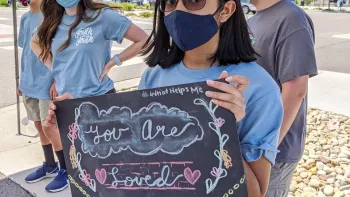
COVID-19 and the national outcry for racial justice has illuminated a need for coordinated, culturally-specific and proactive ACEs and suicide prevention efforts. Through a cooperative agreement with the CDC, PI has partnered with the National League of Cities and Dr. Howard Pinderhughes to offer training and tools to local government and their partners in supporting their communities.

With support from the Violence Prevention Alliance and Global Partnership to End Violence Against Children, Prevention Institute developed this resource to offer PI’s Collaboration Multiplier as a tool for those wanting to initiate or advance multisector efforts to prevent violence, particularly in low- and middle-income countries.
Join us in advancing health equity and community empowerment — get in touch today to support the Prevention Institute’s efforts.