
Understanding that there are underlying conditions that contribute to violence, poverty, and negative early childhood outcomes, First 5 Alameda County is using a strengths-based approach and a variety of partnerships to support communities that have faced the greatest disenfranchisement. This narrative is based on two separate presentations of First 5 Alameda County’s place-based work: Lisa Erickson’s presentation during a 2016 Prevention Institute web conference on engaging the community development sector, and Carla Keener’s Cradle to Community panel presentation at the 2016 American Public Health Association’s Annual Meeting.
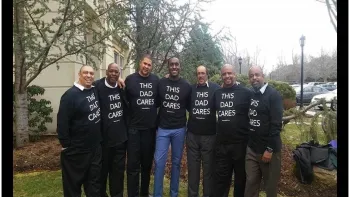
Fathers and father figures are essential members of families and communities who play many roles, including raising children and fostering safety in the community. As part of the national project, Cradle to Community: A Focus on Community Safety and Healthy Child Development funded by the Robert Wood Johnson Foundation, this brief outlines challenges and barriers in the early childhood system and the criminal justice system, opportunities for systems changes, and examples of on the ground efforts to change systems, norms, and outcomes.
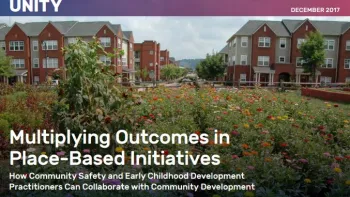
As part of the national project, Cradle to Community: A Focus on Community Safety and Healthy Child Development funded by the Robert Wood Johnson Foundation, this brief shares key findings and answers questions on what the community development sector does and how it relates to early childhood and violence prevention. The brief builds on the overlap between the sectors and puts forth what multisector collaboration could look like between the three sectors, including challenges, tips, potential shared outcomes, partner strengths, and examples of local joint strategies.

This report by Prevention Institute and the Center for the Study of Social Policy makes the case for action and delineates opportunities for systems, policy, and practice change at the intersection of community safety and positive early child development. For example, emergent opportunities at the intersection include changing norms about fathers and fatherhood through systems and practice change; engaging the community development sector to address housing issues through policies and practices; and building the early education to employment pipeline through state and local policy change.

What? Why? How? Answers to Frequently Asked Questions About the Adverse Community Experiences and Resilience Framework builds off of core concepts in the Adverse Community Experiences and Resilience Framework and addresses questions that have emerged in early practice and implementation.

The 2016 Cradle to Community convening was the first opportunity to bring together two national networks: Prevention Institute’s UNITY City Network and the Center for the Study of Social Policy’s Early Childhood Learning and Innovation Network for Communities (EC-LINC).
This PI-authored article published in the Journal of Public Health Policy’s special issue on Violence and Health: Merging Evidence and Implementation details how comprehensive strategies to improve community conditions can reduce violence and promote health equity. It describes how PI tools and frameworks, used by our Urban Networks to Increase Thriving Youth (UNITY) cities, can be adapted for international application in multi-sector collaboration, influencing policy and legislation, and strengthening local violence prevention efforts.

Milwaukee Health Department’s Office of Violence Prevention engaged Prevention Institute to help facilitate the development of the Blueprint grounded in PI’s Adverse Community Experiences and Resilience (ACE|R) framework. The Blueprint for Peace draws on community assets and best practices to focus on preventing violence before it occurs, as well as intervention efforts to ameliorate the impacts of violence and prevent future perpetration and victimization.
When sectors work together to address violence, not only can they fulfill their particular mandates, but they can also better serve communities and improve outcomes for children and youth. Prevention Institute and Futures Without Violence partnered to explore the benefits of engaging multiple sectors in reducing traumatic exposures and inform the Defending Childhood Initiative, as a first of its kind initiative to address children’s exposure to violence, as well as similar efforts that are underway around the country. Using a Collaboration Multiplier analysis, this paper details the assets each sector – education, health, justice, and community, the differences that must be bridged, and possible multi-sector strategies.
Prevention Institute and Futures Without Violence partnered to develop this paper to inform the Defending Childhood Initiative, a first of its kind initiative to address children’s exposure to violence, as well as similar efforts that are underway around the country that have a goal of improving outcomes for children and youth. A Good Solution Solves Multiple Problems: Exploring Prevention Strategies that Address Multiple Forms of Violence lays out the connections among child abuse, intimate partner violence, and community violence. It focuses on the interrelationships among forms of violence, the expertise that practitioners working on different fields bring to a shared solution, the importance of community-driven strategies, and the imperative to move beyond silos and take action.
Collaborate With Us
Join us in advancing health equity and community empowerment — get in touch today to support the Prevention Institute’s efforts.