Health has a lot to do with where we live—and how the land where we live is used. Affordable housing, parks and green space, public transit, pedestrian safety, and other resources related to land use provide the foundations of community health. These are health-supporting resources that all communities deserve.
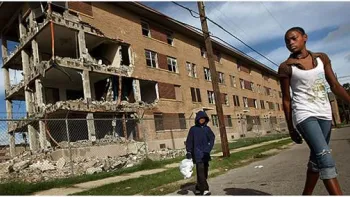
Yet, too often, land use reinforces pervasive, historical health inequities. In many parts of the country, low-income communities of color have not received the same level of investments or innovations in healthy, equitable, and active land uses that have benefited higher income neighborhoods. Better land use decisions, such as increasing access to safe, affordable housing in all neighborhoods, are critical to reducing health inequities and rectifying racial injustices.
Prevention Institute’s work on land use and housing seeks to fundamentally shift land use planning practices so they promote safe, healthy communities where local business owners and residents have the opportunity to thrive.
Land Use & the Built Environment > Content Buckets
Land Use & the Built Environment > Content Buckets
Land Use & the Built Environment > Content Buckets
Prevention Institute has produced a video that explores the intersection of land use and violence prevention. This video came out of our 2015 Community Safety by Design paper, our 2016 HEALU Network summit in Los Angeles on land use and violence prevention, and a continued exploration of these intersectional issues.
Mental health is at the heart of many of the challenges we face, including trauma and adverse childhood experiences, social isolation, institutionalized bias and discrimination, and ‘diseases of despair’ that manifest in depression, suicide, and substance misuse. Addressing social determinants of health is key to helping communities navigate adversity, heal, and flourish. PI’s report, Back to Our Roots: Catalyzing Community Action for Mental Health and Wellbeing, illustrates how improving community conditions can reduce the incidence and intensity of mental health challenges, and help activate resilience.
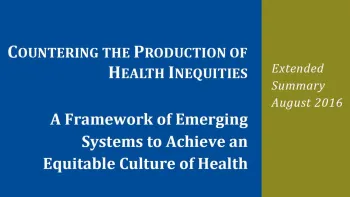
Working as a thought-partner with the Robert Wood Johnson Foundation, PI conducted an analysis to determine the sectors and systems to engage for achieving health equity, and pinpointing the actions to accomplish to achieve equitable outcomes. The analysis resulted in Countering the Production of Inequities: A Framework of Emerging Systems to Achieve an Equitable Culture of Health. The framework underscores how historical and current policies and laws, practices and procedures produce inequities in health outcomes to inform a concrete understanding of how to begin to reverse or ameliorate the inequities and support communities in transforming to achieve an equitable culture of health.
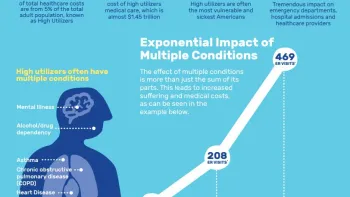
Disrupting the Pathway explores a primary prevention approach to reduce frequent utilization of high-cost healthcare services and includes model strategies that healthcare organizations and their community partners can collectively implement to improve community conditions that have a role in producing high utilization and subsequent costs.
The opportunity to be healthy is not afforded to everyone in America. As a result, many preventable illnesses occur in higher frequency, earlier, and with greater severity among people living in concentrated poverty and in communities of color. With support from the Robert Wood Johnson Foundation, Prevention Institute analyzed what has contributed to these inequities to determine a pathway forward to produce health equity.
This first-of-its-kind framework explores trauma at a community level. It explains how trauma is produced not only by experiencing interpersonal violence but also by experiencing structural violence – the harm that individuals, families, and communities experience from the economic and social structure; social institutions; and social relations of power, privilege and inequity that inhibit them from meeting their basic needs.
Prevention Institute developed a Safety in All Policies framework and actionable recommendations to advance community safety and violence prevention in California through a multi-sector public health approach. This work builds on the growing base of research and practice evidence and growing attention to Health in All Policies.
This brief by Prevention Institute and the American Public Health Association, examines the approaches local elected officials are taking to improve the health of their communities.