Health has a lot to do with where we live—and how the land where we live is used. Affordable housing, parks and green space, public transit, pedestrian safety, and other resources related to land use provide the foundations of community health. These are health-supporting resources that all communities deserve.

Yet, too often, land use reinforces pervasive, historical health inequities. In many parts of the country, low-income communities of color have not received the same level of investments or innovations in healthy, equitable, and active land uses that have benefited higher income neighborhoods. Better land use decisions, such as increasing access to safe, affordable housing in all neighborhoods, are critical to reducing health inequities and rectifying racial injustices.

Prevention Institute’s work on land use and housing seeks to fundamentally shift land use planning practices so they promote safe, healthy communities where local business owners and residents have the opportunity to thrive.

Land Use & the Built Environment > Content Buckets

Prevention Institute’s staff participated on multiple advisory committees and working groups at the local, state, and national levels. In these roles, our staff provided guidance across topics like health equity, mental health, and community violence prevention to various national nonprofits, state governments, and policy advocacy groups. Through this work, we help to advance policy and systems change that is rooted in health equity and prevention.

Such groups include:

Prevention Institute staff shared our work and approach with practitioner audiences at conferences and webinars, including the Association of Black Foundation Executives Annual Conference, the National Association of County and City Health Officials Annual Meeting, and with the National Academies of Sciences, Engineering, and Medicine. PI also hosted a virtual teach-in, which launched PI’s new tool, The Timeline of Resistance.

Prevention Institute completed the inaugural phase of the People, Parks, and Power (P3) initiative, which brought together 14 community-rooted, power-building organizations to address deep-seated park and green space inequities in Black, Latino, and Indigenous communities across the country over two years.

In this brief, Countering the Production of Health Inequities: Ensuring the Opportunity for Health for All, Prevention Institute analyzes how various sectors such as housing, education, and economic development have contributed to inequities in health but also have important roles to play in achieving health equity. There is a role for every institution, sector, and system working together to achieve an equitable culture of health across the United States.

Learn more

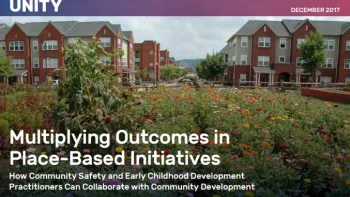
As part of the national project, Cradle to Community: A Focus on Community Safety and Healthy Child Development funded by the Robert Wood Johnson Foundation, this brief shares key findings and answers questions on what the community development sector does and how it relates to early childhood and violence prevention. The brief builds on the overlap between the sectors and puts forth what multisector collaboration could look like between the three sectors, including challenges, tips, potential shared outcomes, partner strengths, and examples of local joint strategies.

Learn more

Collaborate With Us

Join us in advancing health equity and community empowerment — get in touch today to support the Prevention Institute’s efforts.