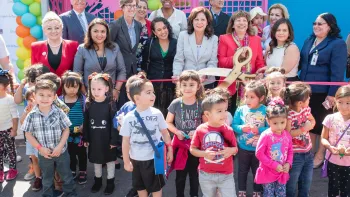
With funding from First 5 LA, Prevention Institute worked with community-based organizations, policy advocacy networks, and coalitions working to improve neighborhood conditions for children 0-5 and their families in Los Angeles County.

 The first years of a child’s life are a critical developmental period that can shape immediate and long-term well-being, making prenatal development and early childhood a key window to support healthy development and prevent harm. Resilient communities, safe housing, quality early childhood care and education, and supportive relationships with caregivers can all have a significant impact on immediate health and well-being across the life course. Through research, multi-sector collaboration, and advocacy, PI works to advance prevention practice on critical early childhood issues, including access to healthy foods and safe places to play and protection from violence, exploitation, and trauma. Prevention Institute also serves on the California Essentials for Childhood steering committee.
With funding from First 5 LA, Prevention Institute worked with community-based organizations, policy advocacy networks, and coalitions working to improve neighborhood conditions for children 0-5 and their families in Los Angeles County.

The first years of a child’s life are a critical developmental period that can shape immediate and long-term well-being, making prenatal development and early childhood a key window to support healthy
Recognizing positive early childhood development as an important component of a comprehensive violence prevention strategy, the New Orleans Health Department is working to bridge their community safety and early childhood efforts. Chris Gunther presented on New Orleans’s violence prevention and early childhood work as part of a Cradle to Community panel at the 2016 American Public Health Association’s Annual Meeting in Denver, CO. This narrative is excerpted from his remarks.
Cathy Costa presented Baltimore’s Maternal and Child Health (MCH) and violence prevention efforts at the 2016 City MatCH Leadership and MCH Epidemiology Conference. Baltimore has been a long-time member of Prevention Institute’s UNITY City Network. The narrative is excerpted from Cathy’s presentation at this September 2016 event in Philadelphia, PA.
Understanding that there are underlying conditions that contribute to violence, poverty, and negative early childhood outcomes, First 5 Alameda County is using a strengths-based approach and a variety of partnerships to support communities that have faced the greatest disenfranchisement. This narrative is based on two separate presentations of First 5 Alameda County’s place-based work: Lisa Erickson’s presentation during a 2016 Prevention Institute web conference on engaging the community development sector, and Carla Keener’s Cradle to Community panel presentation at the 2016 American Public Health Association’s Annual Meeting.
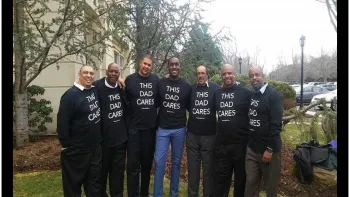
Fathers and father figures are essential members of families and communities who play many roles, including raising children and fostering safety in the community. As part of the national project, Cradle to Community: A Focus on Community Safety and Healthy Child Development funded by the Robert Wood Johnson Foundation, this brief outlines challenges and barriers in the early childhood system and the criminal justice system, opportunities for systems changes, and examples of on the ground efforts to change systems, norms, and outcomes.
As part of the national project, Cradle to Community: A Focus on Community Safety and Healthy Child Development funded by the Robert Wood Johnson Foundation, this brief shares key findings and answers questions on what the community development sector does and how it relates to early childhood and violence prevention. The brief builds on the overlap between the sectors and puts forth what multisector collaboration could look like between the three sectors, including challenges, tips, potential shared outcomes, partner strengths, and examples of local joint strategies.
This report by Prevention Institute and the Center for the Study of Social Policy makes the case for action and delineates opportunities for systems, policy, and practice change at the intersection of community safety and positive early child development. For example, emergent opportunities at the intersection include changing norms about fathers and fatherhood through systems and practice change; engaging the community development sector to address housing issues through policies and practices; and building the early education to employment pipeline through state and local policy change.
The 2016 Cradle to Community convening was the first opportunity to bring together two national networks: Prevention Institute’s UNITY City Network and the Center for the Study of Social Policy’s Early Childhood Learning and Innovation Network for Communities (EC-LINC).
Direct experience as well as exposure to multiple forms of violence can have a compounding negative impact on children’s development. Despite the strong relationship, the fields of practice addressing different forms of violence have largely been silo-ed. This brief summarizes five connections between child maltreatment, intimate partner violence, and community violence and makes the case for an integrated movement for safety in our homes and communities. It draws on recent research and analysis on the linkages between multiple forms of violence and offers examples of emerging actions to address the linkages.
Join us in advancing health equity and community empowerment — get in touch today to support the Prevention Institute’s efforts.