Prevention Institute’s health systems transformation efforts focus on broadening out the definition of the health system to include all the organizations and sectors that contribute to people’s health. The health system in the United States is typically thought of as the network of hospitals, health plans, and community health centers where people receive clinical care. But the system that supports thriving and equitable communities is far broader. During the COVID-19 pandemic, public health agencies and the work they do to support community health, safety, and wellbeing were thrust into the spotlight. Community-based organizations also play a crucial role: during the pandemic, they provided food, financial support, eviction protection, ways to maintain social connection, and other basics that communities need in order to be healthy.

PI advocates for improved integration of all the elements of the system, increased financial support to keep the system stable, and changes to aspects of the system that are perpetuating health inequities and racial injustice. We collaborate with health system partners and to redesign and augment the existing system so that it prioritizes improved health outcomes for communities of color, immigrants, communities with low incomes, and other groups that the health system has previously neglected.

Health Systems Transformation > Content Buckets

Placeholder non-lorem ipsum text:  Prevention Institute works in partnership to champion and support an evolving portfolio of federal policies, practices, and investments. Our priorities are selected based on their role in shaping equitable health, safety, and wellbeing outcomes and are grounded in PI’s organizational commitment to health equity and racial justice and values of connection, dignity, and interdependence.

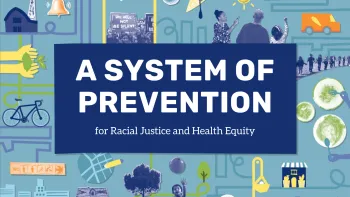
A system of prevention for Racial Justice and Health Equity

Community members and racial justice advocates are collectively pursuing transformative solutions designed for equity and justice, which requires dismantling and replacing policies, practices, and investment patterns that reinforce structural racism.  Prevention Institute is joining this call to action through a body of work to advance a System of Prevention for Racial Justice and Health Equity that supports health, safety, and wellbeing.

This edition of the original Community-Centered Health Homes (CCHH) paper provides an updated description of the CCHH model based on the experiences of healthcare organizations piloting it, and offers practical strategies for implementation. The paper also includes a tool that healthcare organizations can use to assess what capacities they may need as they embark on efforts to improve community health.

Learn more

A Community-Centered Health Home (CCHH) is a healthcare organization that acknowledges that factors outside the clinical setting affect patient health outcomes and actively participates in improving them. Watch this short, animated video for an introduction to how the CCHH model enables healthcare organizations to achieve positive changes in the policies, systems, and environments that shape health.

Prevention Institute’s Larry Cohen and John Auerbach, Executive Director of Trust For America’s Health, published an Op-Ed in The Hill: Ounce Of Prevention Is Worth A Pound Of Cure — Stop Ignoring Preventative Care. Prompted by recent bipartisan efforts to improve the ACA, the Op-Ed emphasizes the importance of building prevention into healthcare policy, which is essential for effectively achieving improved health, lower costs, and reduced burden on the health system.

Learn more

The Affordable Care Act has catalyzed a time of immense opportunity for preventing illness, injuries, and health inequities. A community prevention approach, grounded in multi-sector partnerships, is

Learn more

Mental health is at the heart of many of the challenges we face, including trauma and adverse childhood experiences, social isolation, institutionalized bias and discrimination, and ‘diseases of despair’ that manifest in depression, suicide, and substance misuse. Addressing social determinants of health is key to helping communities navigate adversity, heal, and flourish. PI’s report, Back to Our Roots: Catalyzing Community Action for Mental Health and Wellbeing, illustrates how improving community conditions can reduce the incidence and intensity of mental health challenges, and help activate resilience.

Learn more

Californians have a tremendous stake in the national policy debates underway. Fundamental issues like healthcare access, environmental protections, privatization of public-sector assets and services, and the rights of vulnerable and marginalized communities hang in the balance. Our state is already poised to protect many of the core factors that form the bedrock of Californians’ health and well-being. Together, California communities, families, decision-makers, business leaders, and lawmakers have the opportunity—and the responsibility—to take a proactive and affirmative stance that propels us toward a future that is fair, just, and prosperous for all of our residents.

Learn more

Prevention Institute has a 20-year history of promoting quality primary prevention—the skills and approaches to prevent people from getting sick or injured in the first place. In the aftermath of the 2016 election, we have immersed ourselves in assessing the path forward for prevention and equity.

Learn more

Community prevention and care management strategies can achieve short- and long-term returns January 26, 2017 Jeremy Cantor and Larissa J. Estes In the United States, more than 50 percent of health care costs are accrued by 5 percent of patients. It is not surprising, then, that health leaders’ focus on the Triple Aim — which calls for simultaneously reducing costs, raising quality and improving population health — includes high utilization. There is substantial opportunity for innovation. For example, federal, state and private sector entities are allocating resources to new, high-utilizer

Learn more

Collaborate With Us

Join us in advancing health equity and community empowerment — get in touch today to support the Prevention Institute’s efforts.