
For the fundamentals on Multi-sector Collaboration, we invite you to begin with these publications:

For more on Interdisciplinary Partnerships, browse the related publications below.

With support from the Violence Prevention Alliance and Global Partnership to End Violence Against Children, Prevention Institute developed this resource to offer PI’s Collaboration Multiplier as a tool for those wanting to initiate or advance multisector efforts to prevent violence, particularly in low- and middle-income countries.

Learn more

​Through the leadership of coalitions like the California Partnership to End Domestic Violence (the Partnership) and the California Work and Family Coalition, momentum is already building to promote economic security in support of safe relationships. With that, there is a need to better understand the connections between economic security and partner violence and learn from communities implementing strategies to improve economic security and decrease violence. This brief unpacks these connections and illustrates examples of actions across Prevention Institute’s Spectrum of Prevention.

Learn more

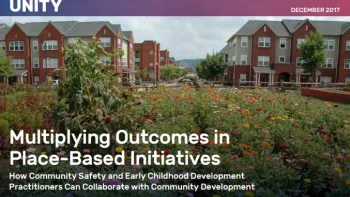
As part of the national project, Cradle to Community: A Focus on Community Safety and Healthy Child Development funded by the Robert Wood Johnson Foundation, this brief shares key findings and answers questions on what the community development sector does and how it relates to early childhood and violence prevention. The brief builds on the overlap between the sectors and puts forth what multisector collaboration could look like between the three sectors, including challenges, tips, potential shared outcomes, partner strengths, and examples of local joint strategies.

Learn more

When sectors work together to address violence, not only can they fulfill their particular mandates, but they can also better serve communities and improve outcomes for children and youth. Prevention Institute and Futures Without Violence partnered to explore the benefits of engaging multiple sectors in reducing traumatic exposures and inform the Defending Childhood Initiative, as a first of its kind initiative to address children’s exposure to violence, as well as similar efforts that are underway around the country. Using a Collaboration Multiplier analysis, this paper details the assets each sector – education, health, justice, and community, the differences that must be bridged, and possible multi-sector strategies.

Learn more

Prevention Institute and Futures Without Violence partnered to develop this paper to inform the Defending Childhood Initiative, a first of its kind initiative to address children’s exposure to violence, as well as similar efforts that are underway around the country that have a goal of improving outcomes for children and youth. A Good Solution Solves Multiple Problems: Exploring Prevention Strategies that Address Multiple Forms of Violence lays out the connections among child abuse, intimate partner violence, and community violence. It focuses on the interrelationships among forms of violence, the expertise that practitioners working on different fields bring to a shared solution, the importance of community-driven strategies, and the imperative to move beyond silos and take action.

Learn more

This report offers research, analysis, frameworks, and practitioner wisdom to understand the factors in the community environment that support safe relationships and a reduction in domestic violence (DV). It identifies opportunities for 13 sectors to engage in DV prevention, and offers a method for multiple sectors to identify joint strengths, strategies, and outcomes. The paper presents an overarching approach to advancing a health equity and multisector approach to DV prevention, and identifies broad elements and immediate next steps to move this approach forward.

Learn more

There is growing recognition that many sectors must be engaged to effectively prevent violence, but people always don't know what they bring to the table or how their sector can pitch in. This publication clarifies the roles and contributions of 10 sectors and 12 departments, and it walks readers through Collaboration Multiplier, an influential Prevention Institute tool. This guide can be used to maximize the benefits of collaboration and overcome the barriers, whether you're just getting started or already have a strong coalition. Key features include: Case examples of how various sectors add

Learn more

There is growing recognition that preventing violence means engaging many sectors, but collaboration can be difficult. This publication outlines the benefits and challenges of multi-sector collaboration, and illustrates how the Collaboration Multiplier tool can help with an example out of Houston. It features a Collaboration Multiplier grid with information about seven public sectors, as well as a sample analysis for how community services, the economic sector, schools and public health might work together to prevent violence. Developed with funding from The Kresge Foundation, "A Multi-Sector

Learn more

The places where we live, work, learn and play affect our health, but not all communities support healthy outcomes, equally. Decisions about the built environment - such as land use, zoning, and community design - have implications for neighborhood access to healthy food, safe places for physical activity and resident experiences of real and perceived violence. In the book Making Healthy Places: Designing and Building for Health, Well-Being, and Sustainability (edited by Andrew L. Dannenberg, Howard Frumkin, and Richard J. Jackson), chapter contributors Manal J. Aboelata, Leah Ersoylu, Larry

Learn more

Collaborate With Us

Join us in advancing health equity and community empowerment — get in touch today to support the Prevention Institute’s efforts.