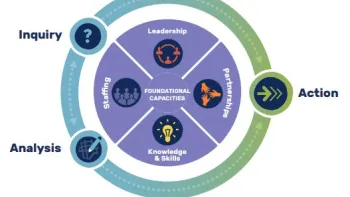
Developed by Prevention Institute in 2011, the Community-Centered Health Home model outlines how healthcare systems can strategically support and engage in community prevention as they continue to deliver high-quality clinical services. It builds upon the pioneering work of Jack Geiger and John Hatch in advocating for community-oriented primary care, as well as current models and practices, like the patient-centered medical home. Community-Centered Health Homes take these concepts a step further by encouraging healthcare institutions to actively help strengthen their surrounding community. A Community-Centered Health Home not only acknowledges that factors outside the healthcare system affect patient health outcomes, but actively participates in improving them.

Since Prevention Institute first developed the CCHH model, it has gained significant momentum. To date, over $12 million philanthropic dollars have been awarded or promised to support implementation of CCHH in six states. We are pleased to have helped catalyze these efforts, serving as a learning partner, and providing technical assistance and training. With implementation at various stages, we gain valuable insights about the different ways that CCHH is being operationalized on the ground. Learn more about how the CCHH model is being implemented across the nation here.

Support from The California Endowment, The Kresge Foundation, Blue Cross and Blue Shield of North Carolina Foundation, Blue Shield of California Foundation, and Episcopal Health Foundation has been instrumental in helping Prevention Institute develop this model, and we are grateful for it.


Community-Centered Health Homes > Content Buckets

A Community-Centered Health Home (CCHH) is a healthcare organization that acknowledges that factors outside the clinical setting affect patient health outcomes and actively participates in improving them. Watch this short, animated video for an introduction to how the CCHH model enables healthcare organizations to achieve positive changes in the policies, systems, and environments that shape health.

Developed by Prevention Institute in 2011, the Community-Centered Health Home model outlines how healthcare systems can strategically support and engage in community prevention as they continue to

Learn more

This fact sheet addresses basic questions about the Community-Centered Health Home (CCHH) model, including what a CCHH is, why healthcare organizations should consider implementing the model, and what we've learned from pilot sites across the country.

Learn more

The Community-Centered Health Homes model, first presented by Prevention Institute in 2011, provides a concrete framework for healthcare organizations to systematically address the community conditions that impact their patients. It combines years of prevention experience about how to keep people from getting sick or injured, with insight gained from interviewing healthcare organizations around the country who were inspired to improve their patients’ health and the health of the communities around them.

When a Chinatown resident was struck and killed by a car while crossing the street, the incident made Asian Health Services (AHS) staff aware of pedestrian safety as a health issue in their community. To better understand how to address structural factors influencing the community, AHS and the Oakland Chinatown Chamber of Commerce opened up a community design conversation that convened urban planners, designers, architects, and artists who together developed and proposed innovative ways to revitalize Chinatown.

St. John’s has seen a ninety-five percent reduction in elevated lead levels as well as reductions in hospital admissions related to asthma. St. John’s commitment to supporting education, socio- economic, and mental health services, the health center has become an asset to other community organizations and an example of how the Community-Centered Health Home model can be manifested over time to address root causes of health issues that affect population health.

In late January, government officials announced a timeline for Medicare’s shift to paying clinicians based on quality of care rather than quantity of services. The community-centered health homes model is an example of this broader way of thinking. Expanding on the patient-centered medical home, it links high-quality medical care with prevention strategies for improving community conditions.

Learn more

Collaborate With Us

Join us in advancing health equity and community empowerment — get in touch today to support the Prevention Institute’s efforts.